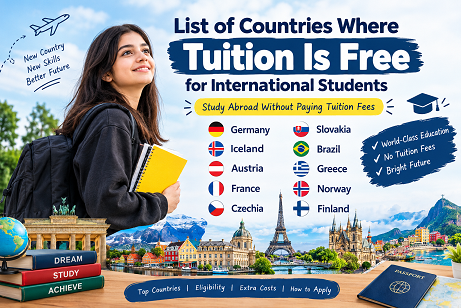
Studying abroad is a dream for many students, but the high cost of university education can make it difficult to achieve. Tuition fees, accommodation, food, transportation, and other living expenses can place a significant financial burden on students and their families. Fortunately, several countries offer tuition-free or low-tuition education at public universities, giving international students an opportunity to earn recognized degrees without paying substantial academic fees.
The list of countries where tuition is free is particularly useful for students looking for affordable bachelor’s, master’s, and doctoral programs. Some countries provide tuition-free education to international students regardless of nationality, while others offer free education only to students who meet specific eligibility requirements.
1. Germany
Germany is one of the most popular destinations for international students seeking affordable higher education. Many public universities do not charge general tuition fees for most bachelor’s and consecutive master’s programs, including those taken by international students.
However, some universities and states charge tuition fees for certain international students or specific programs. Private universities usually charge tuition, and some specialized master’s programs may also have fees.
Key benefits:
- Many tuition-free bachelor’s programs at public universities.
- A wide selection of engineering, computer science, business, and social science courses.
- Numerous English-taught master’s and doctoral programs.
- Opportunities to gain international academic and professional experience.
Students generally need to pay a semester contribution, which may include student services and local transportation benefits. Living expenses, health insurance, visa requirements, and proof of financial resources must also be considered.
2. Norway
Norway has traditionally been known for tuition-free public university education. However, its rules changed in 2023, when tuition fees were introduced for many students from outside the European Economic Area (EEA) and Switzerland.
Some exemptions may apply, including under specific exchange arrangements, agreements, or other qualifying circumstances. Therefore, international students should not assume that every public university in Norway offers free education.
Norway remains attractive because of its research facilities, academic standards, and natural environment. Nevertheless, the cost of living can be high, making financial planning essential.
Key benefits:
- Strong research and academic institutions.
- Programs in science, technology, environmental studies, and other disciplines.
- Potential tuition exemptions for eligible students.
- Opportunities for international academic collaboration.
Students should check the tuition policy of their chosen institution before applying. Official link
3. Iceland
Iceland is another destination worth considering when researching countries with no traditional tuition fees at public universities. The University of Iceland, for example, has historically charged an annual registration fee rather than conventional tuition for many programs.
However, university fee policies can change, and additional charges or different rules may apply to particular programs and applicants. Students should confirm the current requirements for the 2026–2027 academic year.
Iceland offers opportunities in renewable energy, environmental sciences, geology, marine studies, and other research-oriented fields.
Key benefits:
- Public university options with relatively low academic charges.
- Research opportunities in environmental and natural sciences.
- An international academic environment.
- Programs in selected fields taught in English.
The main challenge is the high cost of accommodation and everyday living. Students should prepare a realistic budget before choosing Iceland. Official link
4. Austria
Austria offers relatively affordable public university education compared with many English-speaking destinations. However, tuition rules differ according to nationality, degree program, university, and length of study.
Students from the EU and EEA may qualify for tuition-free study within the standard program duration plus an allowed extension at many public universities. Students from other countries may have to pay tuition fees, although exemptions and special arrangements can apply.
Austria is particularly attractive for students interested in music, engineering, business, natural sciences, and the humanities.
Key benefits:
- Relatively affordable public universities.
- A wide range of academic disciplines.
- A central European location.
- Opportunities to study in German and, for selected programs, English.
Students should also budget for living costs, insurance, accommodation, and any applicable university fees. Official link
5. France
France is known for its established universities, research institutions, and internationally recognized degrees. Public higher education can be relatively affordable, but tuition is not automatically free for every international student.
Non-EU students may be subject to differentiated tuition fees at public institutions. Some universities grant partial or full exemptions, and the fees can differ by program and institution. Certain specialized schools and private institutions charge considerably more.
France is worth considering for students interested in business, fashion, engineering, political science, mathematics, and the arts.
Key benefits:
- A large network of public universities.
- Numerous scholarship and fee-exemption opportunities.
- Strong research institutions.
- Programs in French and selected courses in English.
Students should investigate language requirements and confirm the tuition amount directly with their chosen institution. Official link
6. Czechia (Czech Republic)
Czechia is an excellent option for international students who are willing to learn another language. Public universities generally offer tuition-free degree programs taught in Czech, including for students from outside the European Union.
However, programs taught in English and other foreign languages usually charge tuition fees. Students should check the language and fee requirements of each degree before applying.
Czechia offers programs in medicine, engineering, economics, information technology, and social sciences.
Key benefits:
- Tuition-free study opportunities in Czech-language programs.
- Public universities with established academic reputations.
- A range of bachelor’s, master’s, and doctoral degrees.
- Access to student life in European cities.
International students may need to complete a Czech-language preparatory course before beginning their degree. Official link
7. Slovakia
Slovakia is another European destination where students may access tuition-free higher education under specific conditions. Full-time programs taught in Slovak at public universities can be tuition-free within the standard study period, depending on the student’s circumstances and program.
Programs taught in English generally charge tuition, and additional fees may apply in certain cases.
Students interested in medicine, engineering, economics, agriculture, and computer science can explore Slovak universities.
Key benefits:
- Opportunities for tuition-free study in Slovak.
- A selection of public universities.
- Various academic and research fields.
- European student experiences and cultural opportunities.
Students should verify the admission requirements, language proficiency rules, and current tuition policy before applying. Official link
8. Brazil
Brazil provides public higher education opportunities that can be attractive to international students. Many public universities do not charge tuition for regular degree programs, although admission rules and access for international applicants vary.
Most undergraduate programs are taught in Portuguese, so students generally need sufficient Portuguese-language skills. Some universities offer international exchange programs or selected courses in other languages.
Brazil is particularly suitable for students interested in agriculture, environmental science, public health, engineering, and biological sciences.
Key benefits:
- Tuition-free opportunities at many public universities.
- Strong academic programs in selected research fields.
- A diverse cultural environment.
- Opportunities to study biodiversity, agriculture, and tropical ecosystems.
Although tuition may be free, students must consider accommodation, food, insurance, travel, and visa-related expenses.
9. Greece
Greece is worth exploring for students interested in affordable European education. Public university tuition arrangements depend on the degree level, program language, and nationality of the applicant.
Some undergraduate programs taught in Greek may be tuition-free, while international students enrolled in English-taught programs or particular postgraduate degrees may need to pay fees.
Students can explore courses in humanities, archaeology, engineering, social sciences, and natural sciences.
Key benefits:
- Public university options with affordable study routes.
- Academic opportunities in history, culture, and science.
- A range of undergraduate and postgraduate programs.
- A European study environment.
Before applying, check whether the chosen degree is available to international students without tuition charges.
Official resource: https://studyingreece.edu.gr/
10. Finland
Finland is known for its education system, research facilities, and student-focused learning environment. However, tuition-free education is not available to every international student.
Students from the EU and EEA generally do not pay tuition at public universities. Students from outside these regions, including Pakistan, normally pay tuition for English-taught bachelor’s and master’s programs. Degree programs taught in Finnish or Swedish can have different fee arrangements.
Doctoral programs generally do not charge tuition, although students must still arrange funding for living expenses.
Key benefits:
- High-quality education and research.
- Strong programs in technology, education, and environmental science.
- Tuition-free opportunities for eligible students.
- Scholarship options for certain fee-paying students.
Official resource: https://www.studyinfinland.fi/
Comparison of Countries Where Tuition Is Free or Affordable
The following table summarizes the main options for international students, especially those applying from outside the EU and EEA.
| Country | Tuition situation | Important condition |
|---|---|---|
| Germany | Free at most public universities | Exceptions apply by state and institution |
| Iceland | Generally no conventional tuition at public universities | Registration fees apply; future rules may change |
| Czechia | Free at public universities in some programs | The degree must generally be taught in Czech |
| Slovakia | Free in qualifying public university programs | Slovak-language and other conditions apply |
| Brazil | Many public university degrees are tuition-free | Admission and language requirements vary |
| Norway | Tuition normally applies to non-EU/EEA students | Exemptions may be available |
| Austria | Low tuition compared with many destinations | Non-EU students generally pay fees |
| France | Relatively low public university fees | Non-EU students may pay differentiated fees |
| Greece | Some programs have no tuition | English-taught and postgraduate programs may charge fees |
| Finland | Free for eligible students and certain programs | Most English-taught bachelor’s and master’s degrees charge non-EU students |
Tuition rules vary by institution, nationality, degree level, and academic year. Students should always verify current requirements on official university websites before applying.
What Expenses Must Students Pay Besides Tuition?
Finding a country where tuition is free does not mean that studying abroad costs nothing. International students usually need to cover several additional expenses.
1. Accommodation
Students may rent a room, share an apartment, or apply for university housing. Costs depend on the city, accommodation type, and availability.
2. Food and daily expenses
Groceries, personal items, and meals should be included in the monthly budget. Cooking at home can help students manage expenses.
3. Health insurance
Many countries require international students to have health insurance. The rules and costs depend on the country and residence status.
4. Visa and residence permit
Students may need to pay application charges and provide financial evidence to demonstrate that they can support themselves during their studies.
5. Transportation and study materials
Public transportation, books, a computer, and other academic supplies can add to the overall cost.
How to Apply for Tuition-Free Universities
Students interested in studying abroad without tuition fees should follow a structured application process.
- Choose a country: Compare tuition policies, language requirements, living costs, and admission conditions.
- Find suitable universities: Use official university websites and national education portals.
- Select a degree: Check whether the program is tuition-free for your nationality and intended year of entry.
- Prepare your documents: These may include academic transcripts, certificates, a passport, recommendation letters, and a statement of purpose.
- Meet language requirements: Prepare for any required English or local-language proficiency test.
- Submit your application: Follow the university’s deadlines and application instructions.
- Arrange funding: Prepare a realistic budget for living costs and other expenses, even if tuition is waived.
- Apply for a student visa: Follow the official immigration requirements after receiving admission.
Can Scholarships Cover Living Expenses?
Yes. Students can also apply for fully funded scholarships that cover some or all of their educational and living expenses. Depending on the scholarship, benefits may include tuition fees, accommodation, a monthly stipend, health insurance, and travel support.
A tuition-free university and a fully funded scholarship are not the same thing. Tuition-free education removes or reduces academic charges, whereas a fully funded scholarship may also provide money for everyday expenses.
Students should explore government scholarships, university funding, international exchange programs, and research grants. Always check eligibility requirements, application deadlines, and the benefits included in each award.
Frequently Asked Questions (FAQs)
Which country is best for tuition-free education?
Germany is one of the strongest options because most public universities do not charge general tuition fees for many degree programs, including those taken by international students. However, students must check state-specific and university-specific exceptions.
Can Pakistani students study abroad without tuition fees?
Yes. Pakistani students can explore tuition-free opportunities at eligible German public universities, Czech-language programs in Czechia, and qualifying public university programs in other countries. Admission requirements and living expenses still apply.
Is Norway tuition-free for international students?
Not generally for students from outside the EU and EEA. Since 2023, most non-EU/EEA degree students have been required to pay tuition at Norwegian institutions, although exemptions exist.
Does tuition-free mean fully funded?
No. Tuition-free education means students do not pay tuition under the applicable rules. Accommodation, food, travel, insurance, and visa expenses may remain the student’s responsibility.
Can students study in English for free?
Yes, in some cases, particularly at eligible German public universities. However, English-taught programs in many countries charge tuition. Students should check the exact program rather than relying only on the country’s general education policy.
Conclusion
The list of countries where tuition is free offers valuable starting points for students who want an international education without high academic fees. Germany, Czechia, Slovakia, Brazil, and Iceland are among the destinations worth investigating, although the availability of free tuition depends on the university, program, language of instruction, and applicant’s nationality.
Austria and France may also provide affordable alternatives, while Norway and Finland require careful consideration of their tuition rules for non-EU students.
Before choosing a destination, compare the total cost of studying, check official admission requirements, and investigate scholarships that could help cover living expenses. With careful planning, students can find a suitable international degree that fits their academic goals and financial circumstances.
Important: Tuition policies can change. Confirm the latest information directly with the university or official national study portal before applying.